
May’s Coffee of the Month: Bespoke Blend

May is National Bike Month, and we heralded it in by serving espresso drinks and cold brew at the New Amsterdam Bike Show.

Whether it’s the skill and nuance involved, the sleek machinery, the energy, the culture or the sheer fun of it, coffee and cycling seem to go hand in hand. Many of our customers arrive at our roaster on two wheels. And biking is has been integral to daily business for Brooklyn Roasting Company; we started out delivering coffee on a vintage work bike, and our roasters and many of our baristas cycle to work every day. Throughout May we’re paying homage to the virtuous vélo with our Bespoke blend, created with the NYC Bike Ambassadors as our inspiration. It’s a balanced combination of bright, lemony Guatemalan Finca Ceylan and rich, buttery Colombian Santa Barbara beans.

Both the Finca Ceylan and Santa Barbara estates are acknowledged for their commitment to sustainability and environmental awareness – something we cyclists are conscious of too.

Santa Barbara Estate is located in the southwest section of the Department of Antioquia in northwest Colombia. This estate is described as integrated, which means that all stages of the production happen there and are carefully tracked by the farmers and workers, from producing seedlings through to harvesting and processing. Santa Barbara has expanded gradually, establishing a healthy and sustainable balance between sophisticated production and artisanal integrity. The near-constant temperature in the region (generally around 75-80 degrees F all year), high altitude (5,280 feet above sea level) and the nutrient-rich volcanic soil are ideal for growing the Castillo varietal of Arabica, a flavorful hybrid of the Caturra and Timor trees.

A dedication to traceability and sustainability is what drives the team at Santa Barbara. As well as attention to detail in terms of the quality of its beans, the estate has a stringent water management scheme and recycles all its solid waste as compost to enrich the soils in its seed beds. The estate’s full-time staff are supported with education, health and pension programs, and seasonal staff are paid well above minimum wage and provided with food and accommodation.

The organic Finca Ceylan, from Finca Ceylan y Anexos in Atitlán, Chimaltenango is grown in rolling volcanic foothills around 3,500 – 4,500 feet above sea level. The microclimate is tropical and humid and, combined with rich clay-like soils, provides the ideal conditions for a range of varietals such as Bourbon, Typica and Mundo Novo. The farm also cultivates cardamom, macadamia nuts, plantain and banana, the latter of which is used as a shade crop for the coffee bushes. However, much of the farm is also dedicated to a forestry preserve, where rare indigenous trees are maintained, providing a protected environment for wildlife and helping to prevent soil erosion on the steeper slopes.

Finca Ceylan has contributed to community development with new houses, drinkable water, and education centers for its employees and 
their children. The farm maintains the river basins and the natural vegetation that grows nearby. Hunting and fishing is prohibited to conserve natural fauna and flora, and the water used in the wet mill process is filtered through oxidation tanks to avoid contamination in river basins.

Yes We CAN! And you CAN too…

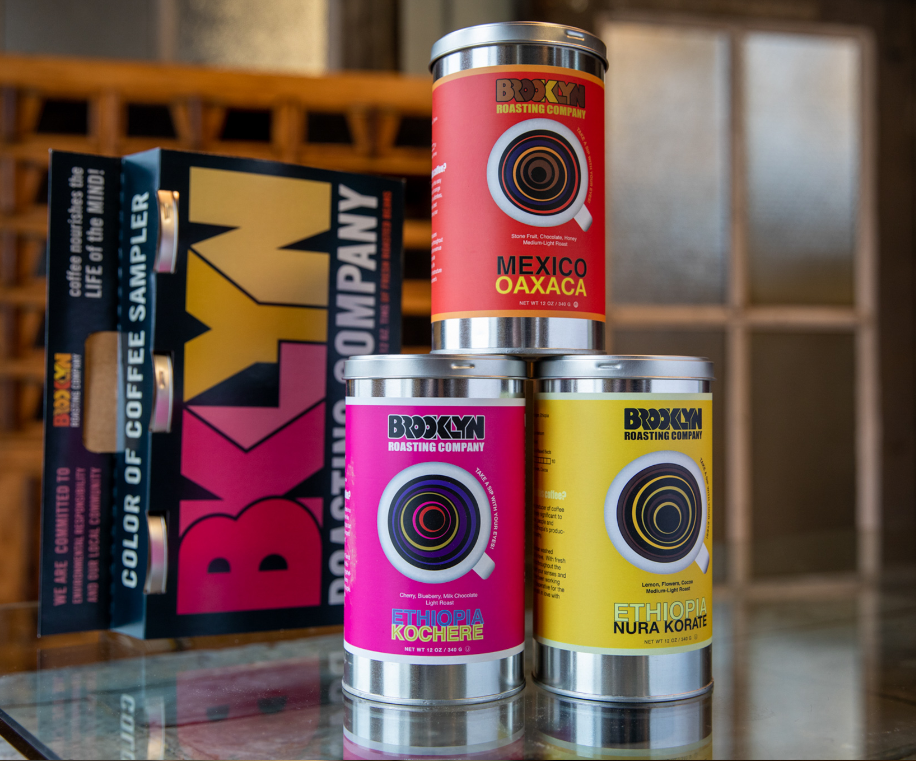
We’re saving paper by switching to re-usable, recyclable tin-steel can packaging! Why?

Tin-steel is currently the most easily and most frequently recycled material in the world.“Tin” cans are actually made of steel then finely coated in tin to prevent rusting. These materials are among the easiest to recycle because they can be separated out of other materials using industrial magnets. According to the Steel Recycling Institute, more steel is recycled each year than paper, plastic, aluminum, glass and copper combined (measured in tons). Not only is steel easy to collect for recycling, recycled steel (steel scrap) is an essential material in the production of raw steel. Steel is continuously recyclable, meaning it can be recycled over and over without losing any of its quality or strength. In general, all steel cans are made of at least 25% recycled steel, while many are made of nearly 100% recycled material.

Canning the coffee maximizes its shelf-life, trapping and protecting its delicate flavors and aroma. For several days after roasting, coffees give off Carbon Dioxide. Since we package the coffee in cans the same day we roast it, the coffee releases the CO2 into the can, displacing the oxygen through the degassing valve. Replacing the Oxygen with Carbon Dioxide is important because exposure to Oxygen is what causes foods (and coffee) to deteriorate and stale.

In order to can our beans, we just added a Continental Can Company Panama Can Seamer to our crew! This work-horse machine can CAN up to 50 cans a minute, though we’ve reined it in a bit for our everyday use. Our Panama Seamer was patented in the mid-1930s and is the same model machine used for packaging canned foods shipped overseas during World War II. We love it for its silent power and the homage it pays to New York City’s industrial days and our neighborhood’s own Navy Yard. You’ll love it for the fantastic freshness of your coffee months after we’ve roasted it.

You can participate by bringing your can back for more (and a dollar off to boot)! The cans cost us a dollar, so if you buy a can of coffee and bring your can back, we’ll fill it up and charge you a dollar less. Pretty good deal for saving the earth—we win, you win, Earth wins–Great Job! On top of all these other benefits, the cans look SNAZZY. Come see for yourself at our Roastery (25 Jay St. in Dumbo) and ask to take a peak at our vintage Can Seamer.